Current Trainees
-
Brett Aiello

The University of Chicago
Graduate Program in Integrative Biology
Advisor: Melina HaleResearch: Brett studies fish and tetrapod locomotion and musculoskeletal neuromechanics. He is testing whether fin proprioception changes in fish with different pectoral fin mechanics to better understand how sensory-motor systems evolve and function.
-
Adam Hardy
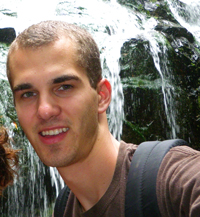
The University of Chicago
Graduate Program in Integrative Biology
Advisor: Mark WestneatResearch:Adam seeks to integrate the fields of biomechanics and neurobiology to examine the fish sensorimotor system. He is particularly interested in benthic fish and how their fins are adapted for substrate-based behaviors. Insights into the mechanical properties and sensory capabilities of fish fins will contribute to our current understanding of fish locomotion.
-
Hilary Katz
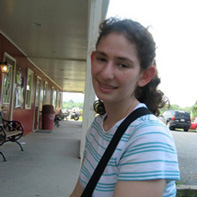
The University of Chicago
Graduate Program in Integrative Biology
Advisor: Melina HaleResearch: Hilary is interested in subtle neural changes that occur through ontogeny. She is studying how the zebrafish startle response changes (in terms of behavior and neural circuit) with respect to body shape as they develop from larvae to adult form.
-
Justin Lieber
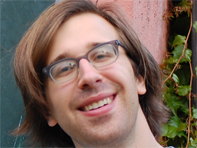
The University of Chicago
Committee on Computational Neuroscience
Advisor: Sliman BensmaiaResearch: Mechanoreceptors of the primate hand transform stress and strain in the skin into neural signals. Justin is interested in how these signals encode information about object texture and how these codes change as information moves through the central nervous system.
-
Joseph Lombardo
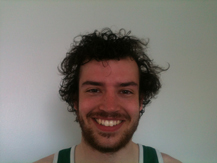
The University of Chicago
Committee on Computational Neuroscience
Advisor: Stephanie PalmerResearch:Joe is interested in the efficient coding of information in the visual system. He uses statistics and information theory alongside neurophysiology to explore how the brain solves problems of information extraction and prediction.
-
Yashesvini Vinayak Ram

The University of Chicago
Graduate Program in Integrative Biology
Advisor: Callum RossResearch: I study muscle coordination (i.e. modulation of relative activation time and amplitude) during rhythmic mastication in primates. I am testing the neural and mechanical sources of variation in muscle coordination during jaw closing to identify possible optimality criteria acting on the masticatory system. This research will help us better understand how neural and mechanical factors interact to produce the more narrow range of motor patterns observed during rhythmic behaviors.
-
Jeff Walker
The University of Chicago
Committee on Computational Neuroscience
Advisor: Nicho HatsopoulosResearch: Jeff is interested in motor skill acquisition. To address this interest, he will investigate the scale and stability of movement representations in sensorimotor cortex as common marmoset monkeys perform cued and self-directed reaching tasks.
-
Z. Yan Wang
The University of Chicago
Committee on Neurobiology
Advisor: Clifton RagsdaleResearch: Yan studies the suite of motor behaviors that accompanies senescence in the female octopus. She is interested in the molecular mechanisms and neurological pathways that underlie these behaviors.
Former Trainees
-
Chris Bresee
Northwestern University
Interdepartmental Neuroscience program
Advisor: Mitra HartmannResearch: Chris is interested in active sensation, and particularly in how different sensorimotor contingencies shape spatial perception. Currently he is using the rat vibrissal system as a model to investigate the relationship between whisk kinetics and timing, and cortical activity. Chris is particularly interested in behavioral and neurobiological approaches to these questions.
-
Kyler Brown
The University of Chicago
Committee on Computational Neuroscience
Advisor: Daniel MargoliashResearch: Kyler is interested in the acquisition and control of motor sequences. He uses zebra finch song behavior, biophysical models of song production, and neurophysiology to explore the neural basis of vocal behavior.
-
Brendan Chambers
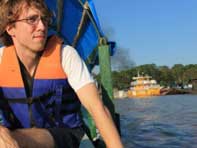
The University of Chicago
Committee on Computational Neuroscience
Advisor: Jason MacLeanResearch: Brendan will be examining microcircuit properties of motor cortex using whole-cell recording and two-photon imaging in mouse slices loaded with a calcium sensitive fluorescent dye.
-
Heather King
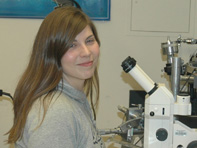
The University of Chicago - Graduated August 2012
Department of Organismal Biology and Anatomy
Advisor: Melina HaleResearch: Heather is interested in the evolution of pedestrian locomotion in aquatic vertebrates. She studies lungfish and other fish that have pelvic fins capable of propelling the animal along the bottom, and is interested in viewing the pelvic fins in these groups as biomechanical systems to determine what strategies they have in common and how they differ. She hopes to understand constraints on evolving this behavior, and potentially compare these animals to other animals to better understand how pedestrian locomotion has arisen in a wide variety of taxa.
-
Justin Lemberg

The University of Chicago
Department of Organismal Biology & Anatomy
Advisors: Callum Ross and Neil ShubinResearch: Justin is interested in questions of feeding biomechanics in early tetrapods and extant analogs. Presently, he is studying the cranial and mandibular sutures of Tiktaalik roseae, a Devonian sarcopterygian that predates the water-to-land transition but also shows many preadaptations for terrestriality. One question of interest concerns the functional constraints of aquatic feeding, and how that feeding regime compares to a terrestrial feeding regime.
-
Joanna Mandecki
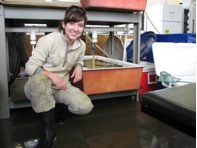
The University of Chicago - Graduated August 2014
Department of Organismal Biology and Anatomy
Advisor: Mark WestneatResearch: Joanna is interested in vertebrate locomotion and the use of sensory feedback in the coordination of movement. She is currently studying the integration of functional systems during pectoral fin swimming.
-
Etienne Manderscheid
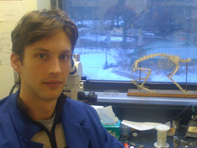
The University of Chicago - Graduated August 2014
Committee on Computational Neuroscience
Advisor: Dan MargoliashResearch: Etienne is interested in questions of motor learning and control. Presently, he is examining the chronic effects of altered auditory feedback on the song of young adult zebra finches. One question of interest concerns the active mechanisms of song maintenance, and whether they are different from those of song acquisition.
-
Charlene McCord
The University of Chicago
Department of Organismal Biology and Anatomy
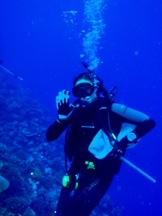
Advisor: Mark WestneatResearch: Charlene is interested in the functional consequences of structural duplication in the adductor mandibulae complex of monacanthid and balistid fishes.
-
Aaron Olsen
The University of Chicago
Department of Organismal Biology and Anatomy
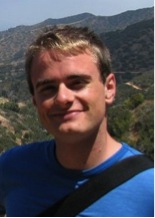
Advisor: Mark WestneatResearch: Aaron is studying the evolution of the cranial form and function in birds. He is testing whether the shapes of the mobile skeletal elements in bird skulls are related biomechanically to beak form and function in order to better understand how musculoskeletal systems evolve and function.
-
Namrata Patel
Northwestern University
Department of Engineering Sciences and Applied Mathematics
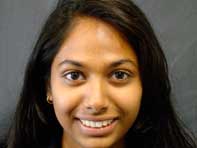
Advisor: Neelesh PatankarResearch: By integrating her backgrounds in applied mathematics and biomedical engineering, Namu is analyzing neuromuscular feedback in vertebrate. Her research currently requires her to employ immersed boundary techniques and other numerical methods to study the movement (generated by muscle contractions) of fish.
-
Bradley Patterson
Northwestern University - Graduated August 2014
Department of Neurobiology and Physiology
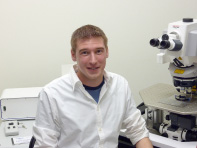
Advisors: David McLean and Malcolm MacIverResearch: Brad is interested in the ontogeny of sensory and motor systems and how these systems integrate during early development. He uses larval zebrafish prey capture as a behavioral model, examining developmental changes in behavior, neural circuit morphology, and neuronal activity.
-
Alexander Rajan
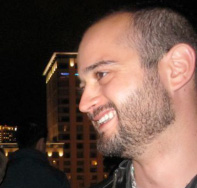
The University of Chicago
Committee on Computational Neuroscience
Advisor: Nicho HatsopoulosResearch: Alexander is interested in sensorimotor integration during naturalistic behaviors. In particular, he is investigating the communication between motor and sensory areas in the neocortex of primates during grasping.
-
Christopher Schroeder
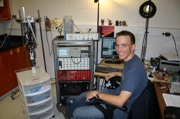
Northwestern University - Graduated December 2013
Department of Biomedical Engineering
Advisor: Mitra HartmannResearch: Christopher is interested in utilizing robotic and simulated models of the rat whisker system to analyze whisking behavior. He plans to use high speed video to see both how a rat moves when it is exploring an object, and how its whiskers move. He is also interested in using electrophysiological recordings to figure out how first order sensory neurons encode whisker movements and contacts.
-
Thomas Stewart
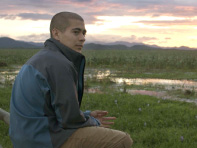
The University of Chicago
Department of Organismal Biology and Anatomy
Advisors: Michael Coates and Robert HoTom plans to study the caudal skeleton of fishes. He hopes to integrate paleontological and developmental data to understand the evolution of morphology and patterns of vertebrate diversity.
-
Gregg Tabot
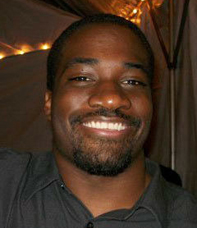
The University of Chicago
Committee on Computational Neuroscience
Advisor: Sliman BensmaiaGregg is interested in characteristics and functions of neurons in somatosensory cortex regarding proprioception in the hand. He is achieving this by using markers attached to the hand, the arm, and finger joints along with cameras which track three-dimensional positioning and is relating them to neural signals recorded from the brain.
-
Mukta Vaidya

The University of Chicago
Committee on Computational Neuroscience
Advisor: Nicho HatsopoulosMukta is interested in the representation and coordination of naturalistic movement in motor and premotor cortex, and using such encoding models to guide models for decoding movement information from neural signals. She is currently looking coordination of movement during reaching and grasping behavior.
-
Richard Williams IV
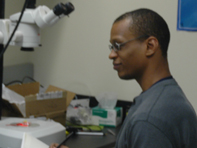
The University of Chicago
Committee on Computational Neuroscience
Advisor: Melina HaleResearch: Richard’s research interests combine neuroscience, evolution, and behavior. He currently is examining the evolutionary and behavioral consequences in the zebra fish startle response of a genetic manipulation that has eliminated one class of spinal interneuron.
-
Sarah Wohlman
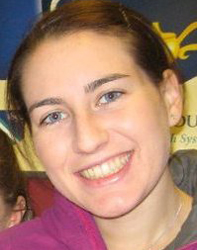
Northwestern University
Department of Biomedical Engineering
Advisor: Wendy MurrayResearch: I am interested in the study of human movement through the development of biomechanical models that can accurately predict human function. Specifically I am working to develop a biomechanical model of the hand in order to quantify factors fundamental to creating movement, such as muscle activation patterns and the resulting distribution of muscle forces.